

Change the Narrator: A Simple Journalling Method for Clarity and Self-Reflection
wellnessChange the Narrator: A Simple Journalling Method for Clarity and Self-Reflection
by Stephanie whitlockJournalling has always been a quiet companion of mine — a private testament to my own existence. It is a way of confirming, if only to myself, that I was here, that I felt deeply, and that my days were not simply slipping past me but teaching, reflecting and quietly shaping my story.
And yet, I rarely reach the final page.
Somewhere halfway through each notebook, a familiar shift occurs. One entry disrupts the narrative I thought was so clear — a moment where every carefully arranged thought begins to unravel. Suddenly I find myself questioning the very message I have been writing to myself.
A difficult day, a moment of grief or an unexpected wave of self-doubt quietly leads me away from my original purpose.
When I reread those entries later, I often pause and wonder: why did I feel this way — and who was this version of me?
The words feel foreign, as though someone else has stepped into the margins and vandalised the story I believed I was writing.
So I would try to remove it. Erase it from my mind. Attempt to strip the page of its negativity and begin again, as though rewriting the moment might somehow restore the narrative I had intended.
Because to me, journalling has always been a tool for accessing the mind — a place where beliefs unfold, lessons quietly reveal themselves and we begin to recognise the subtle ways we are evolving. Yet I approached it with one quiet rule: every entry should end with a clear message, a takeaway for my future self.
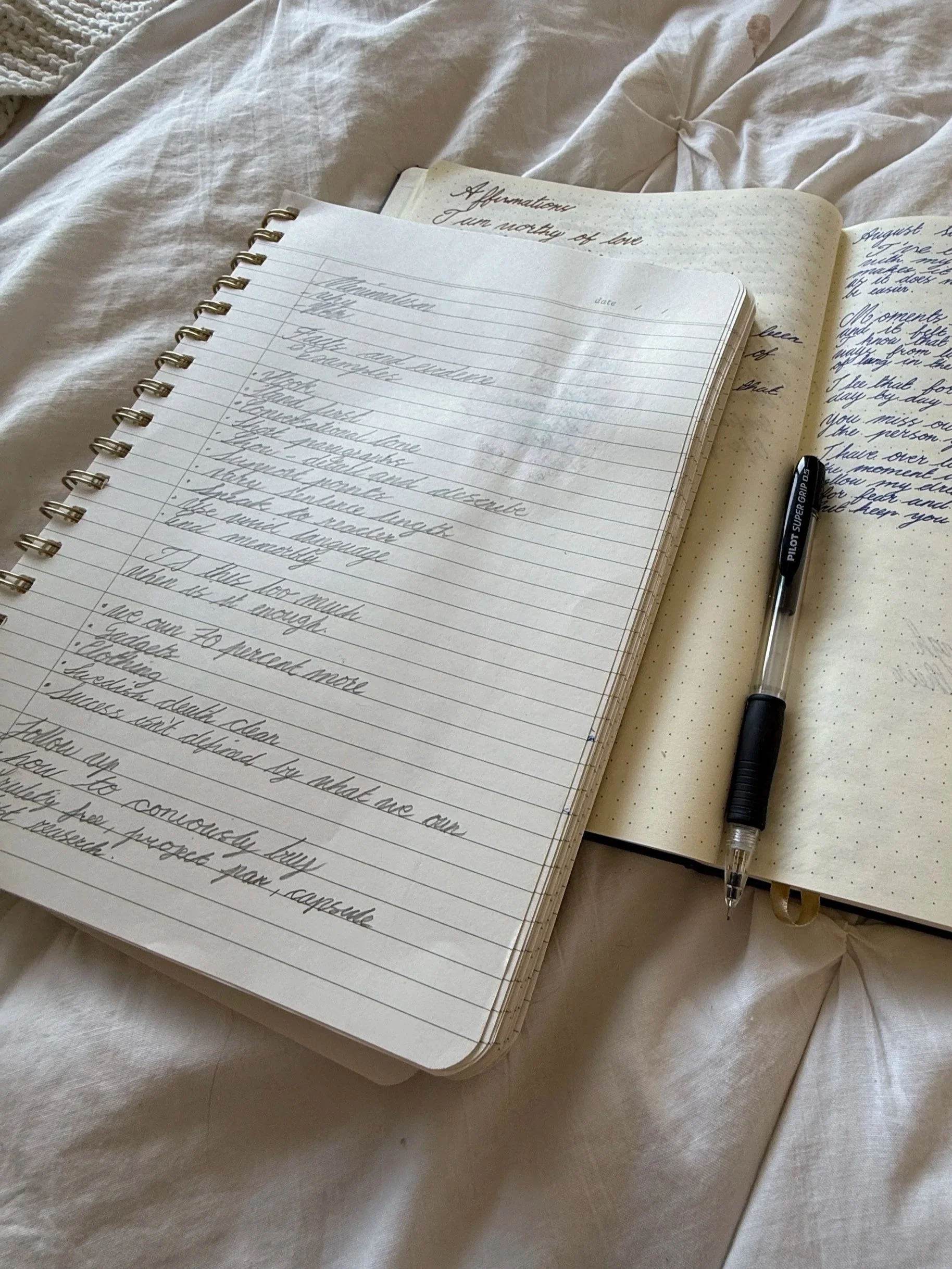
Recently, I bought a leather-bound journal with a new intention. This time every entry would conclude with a key takeaway — something that offered clarity or peace.
But I began to wonder whether the problem was not the entries themselves, but the way I was writing them.
Instead of recording my thoughts in the middle of emotion, I tried something different.
I changed the narrator.
Changing the Narrator
Rather than writing as the person experiencing the moment, I wrote as though I were a friend observing it. Someone who listens, analyses and responds with compassion rather than judgement.
The page became a place where my thoughts could slow down. Feelings that once felt tangled in my mind could be laid out and understood through simple observation.
Emotions were no longer centre stage. They were acknowledged, then gently set aside.
Instead of writing, I feel stressed and disappointed, the entry became: Today’s reaction suggests a pattern — I need to rest and recalibrate.
The difference is subtle. The impact is not.
When you change the narrator, you disrupt the story you have been telling yourself. Patterns emerge where chaos once lived. Responsibility surfaces where circumstance once dominated. You begin to notice your role — not just your wounds.
Journalling stops being a simple retelling of daily life. Instead, it becomes a place where experiences are examined and conclusions slowly take shape.
The process itself is surprisingly simple.
A More Useful Way to Journal
Journalling stops being a simple retelling of daily life. Instead, it becomes a place where experiences are examined and conclusions slowly take shape.
Following this method meant letting go of the daily ritual. Rather than writing every evening out of habit, I began sitting with ideas for a few days — sometimes even weeks — until I fully understood what I was trying to say.
Small observations would appear gradually. I would make notes on my phone as patterns began to reveal themselves, collecting evidence of my reactions, behaviours and thoughts until a clearer picture formed.
Only then would I return to the page.
The process itself is surprisingly simple.
How to Journal This Way
Describe the situation first
Begin by writing what happened as though you were an observer rather than the person experiencing it. Focus on the event itself before interpreting it.
Notice your reaction
Look at your behaviour rather than your emotions. What decision did you make? How did you respond? What followed as a result?
Look for patterns
Certain themes will begin to appear — recurring frustrations, habits, reactions or beliefs that influence how you move through situations.
Introduce the second perspective
Ask yourself: If someone I loved described this situation to me, what would I say to them?
End with a clear takeaway
Conclude with one small insight. Not a dramatic resolution, but a piece of understanding — a behaviour to adjust, a belief to question or a pattern to watch more closely.
The Power of Stepping Outside Yourself
Over time, the journal stops being a place where emotions are simply recorded. Instead, it becomes a place where clarity begins.
Over time, the notebook becomes something entirely different from what it once was. It becomes a quiet record of evolution.
There is something psychologically powerful about stepping outside yourself. Creating distance between an experience and your interpretation of it allows clarity to surface — a principle often described as cognitive reframing. When you observe your thoughts rather than simply reacting to them, patterns begin to reveal themselves.
The journal stops being a diary of moods and becomes something closer to a mirror. A place where behaviour, beliefs and reactions can be seen more clearly, and where change begins quietly through awareness.
Looking back at my earlier journals now, they feel indulgent — pages heavy with longing but light on direction. They captured emotion, but rarely examined it. They romanticised change without understanding what needed to shift.
This approach feels different. Simpler. Braver.
It requires honesty without theatrics and curiosity without judgement. And slowly something else changes too: you stop wanting to abandon the notebook halfway through.
Because once you realise that you can change the narrator, you begin to understand something even more powerful.
You can change the narrative.
And when the narrative shifts, the life that follows often begins to shift with it as well.





Make your life a masterpiece where you can look back and adorn the beauty of it.